Digitising India’s Power Grid: How Modern Infrastructure Can Transform Development Outcomes
The Global Energy Alliance for People and Planet aims to raise one hundred million dollars by 2028 to digitise the power grid in India. This effort reflects a critical shift in development economics, where reliable electricity, data integration, and digital monitoring are becoming essential components of inclusive growth. This article explores how grid digitisation affects productivity, poverty reduction, and long term development.
Electricity once existed primarily as a supply problem in developing economies. The core challenge was expanding generation capacity and connecting underserved regions. Today, the frontier has shifted. Reliability, efficiency, and real time data integration have become just as important as physical access. The Global Energy Alliance for People and Planet’s plan to raise one hundred million dollars by 2028 to digitise the power grid in India highlights this new phase in development thinking.
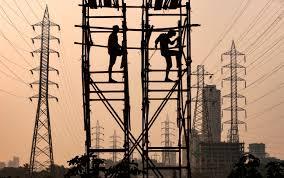
Grid digitisation goes far beyond installing smart meters. It involves modern monitoring systems, digital substations, advanced analytics for demand prediction, and control layers that allow faster response to outages. For a country as large and diverse as India, these tools can fundamentally reshape economic activity at the local level. When electricity becomes more predictable, small businesses gain the confidence to invest. Households reduce reliance on backup generators. Farmers can power irrigation reliably and at lower cost. These micro level improvements have significant aggregate effects on growth.
One major benefit of digitisation is reduced technical and commercial losses. India’s distribution networks lose a substantial share of electricity through inefficient equipment, theft, or outdated systems. Smart infrastructure helps pinpoint where losses occur, enabling targeted investment and reducing financial strain on state distribution companies. Lower losses translate into better financial health for utilities, which can then reinvest in service improvement rather than accumulating debt.
Reliable power also strengthens labour productivity. In regions where outages are frequent, workers in manufacturing and services face interruptions that slow output and increase costs. With a digital grid, outages become shorter and less frequent because operators have real time visibility. This reliability supports continuous production cycles and reduces spoilage or downtime, particularly in food processing, textiles, and small scale manufacturing.
Digitisation also plays a transformative role in rural development. Electrification has already reached most villages, but reliability remains uneven. Real time monitoring allows utilities to detect rural outages instantly rather than relying on manual reporting. Faster repair times mean more predictable power for schools, clinics, and small shops. In rural education, stable electricity supports computer labs and online learning tools. In healthcare, reliable power ensures refrigeration of medicines and operation of diagnostic equipment.
Another important dimension is the integration of renewable energy. India has rapidly expanded solar and wind capacity, but managing these sources requires sophisticated balancing systems because renewable generation fluctuates throughout the day. A digital grid enables smoother integration of renewables by forecasting demand more accurately and matching it with available generation. This reduces dependence on coal and lowers long term energy costs. By aligning sustainability and development goals, India’s grid modernisation becomes part of a broader transition toward cleaner growth.
Consumer behaviour also shifts when digital infrastructure is in place. Smart meters give households visibility into consumption patterns. This improves energy budgeting and reduces waste. For low income households, even small savings can free income for education, nutrition, or investment in micro enterprises. Behavioural change created by better information is one of the most cost effective tools in development economics.
The financing model itself carries lessons. Mobilising one hundred million dollars through a combination of development finance institutions, philanthropic contributions, and private investment demonstrates how blended finance can accelerate infrastructure upgrades. Traditional public funding alone is rarely sufficient for large scale digitisation projects. Blended finance structures allow risk sharing and attract investors who may not otherwise enter the energy distribution sector. This reflects a broader trend in development financing where catalytic capital unlocks larger flows of private investment.
Governance is a crucial variable. Digitisation requires strong coordination between central and state regulators, distribution companies, and technology providers. Regulatory clarity ensures that utilities have incentives to adopt new systems and maintain them effectively. Without supportive governance, digital tools may not reach their potential, highlighting the institutional dimension of development economics.
Challenges remain. Some distribution companies have limited technical capacity to adopt advanced digital systems. Upfront investment costs are significant, and benefits accrue gradually. Rural areas may require additional support to ensure equitable deployment. Data privacy and cybersecurity also emerge as new concerns as utilities digitise operations.
Even with these challenges, the direction is clear. Development depends not only on access to electricity but on the quality and reliability of that electricity. Digitising India’s grid represents a shift toward a modern economic foundation where energy supports productivity, efficiency, and long term growth. It aligns infrastructure with digital transformation efforts across education, health, commerce, and agriculture.
The investment announced by the Global Energy Alliance is therefore more than a technical upgrade. It represents an evolution in how development policy understands the link between infrastructure and human welfare. As digitisation proceeds, the impact on everyday life may be profound, helping millions of households and businesses move toward a more stable and productive future.
Cite this article
“Digitising India’s Power Grid: How Modern Infrastructure Can Transform Development Outcomes.” The Economic Institute, 20 February.
How did this article make you feel?
Comments
No comments yet. Be the first to share your thoughts.
Further Reading
More from Development Economics
The Hunger Spiral: Why West Africa's Food Crisis Is Getting Worse and What Economics Tells Us About Fixing It
Millions face starvation across west and central Africa, and the structural forces driving the crisis go far deeper than drought or conflict alone.
Development EconomicsStabilization And Cyclones: Sri Lanka’s Recovery Under Climate Pressure
Sri Lanka’s post default program is praised for restoring stability, but a devastating cyclone and deep social strains highlight the limits of narrow success metrics. This article examines the tension between fiscal adjustment, climate shocks and human welfare.
Development EconomicsPakistan’s Rising Poverty: Anatomy Of A Multi Year Economic Squeeze
Pakistan’s official poverty rate has climbed to an estimated 28.8 percent after years of inflation, climate shocks and stop start stabilization. This article unpacks the drivers, regional differences and policy options to prevent a deeper social crisis.
Development EconomicsCan Faster Growth In Low Income Countries Break The Poverty Trap
low-income-countries-growth-prospects