
The Hunger Spiral: Why West Africa's Food Crisis Is Getting Worse and What Economics Tells Us About Fixing It
Millions face starvation across west and central Africa, and the structural forces driving the crisis go far deeper than drought or conflict alone.
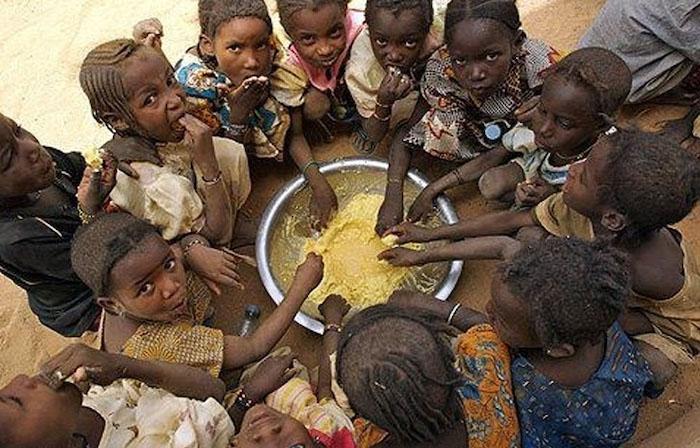
Famine does not arrive without warning. It builds slowly, through a compounding of failures: policy failures, market failures, governance failures, and the slow erosion of buffers that once allowed communities to absorb shocks. What is unfolding across west and central Africa in 2026 follows this grim pattern with disheartening precision. Tens of millions of people across the Sahel, the Lake Chad Basin, and the Gulf of Guinea coastline face acute food insecurity, and expert projections suggest the situation will worsen before any meaningful improvement takes hold.
Understanding the Anatomy of a Food Crisis
To understand why the hunger crisis in this region is escalating, it helps to separate its drivers into two categories: the chronic and the acute. Chronic drivers have been building for decades. They include soil degradation from overfarming and desertification driven by climate change, population growth that has consistently outpaced agricultural productivity gains, and a structural underinvestment in rural infrastructure, from irrigation systems to cold-chain logistics that could reduce post-harvest losses currently estimated at 30 to 40 percent of total output in some countries.
Acute drivers compound these chronic weaknesses. The Sahel has experienced some of the most severe rainfall volatility on record over the past three years. Simultaneously, security crises in Mali, Burkina Faso, Niger, and northeastern Nigeria have displaced farming communities, disrupted supply chains, and made humanitarian delivery operations increasingly dangerous and expensive. When a farmer is forced to flee their land by an armed group in the middle of a planting season, no amount of good macroeconomic policy can recover that harvest.
The Global Price Environment Is Making Things Worse
Here is where the current geopolitical moment intersects with a regional tragedy in a way that deserves more attention than it typically receives. The ongoing conflict involving Iran and disruptions to Persian Gulf shipping lanes have sent global energy prices surging. Oil approaching the $100 per barrel threshold has a direct and disproportionate effect on food systems in import-dependent low-income countries.
Fertilizer, which is largely derived from natural gas, becomes more expensive to produce and to ship. Diesel-powered irrigation pumps and agricultural machinery become more costly to operate. Transport costs for moving food from port cities into landlocked interior markets, already substantial across the Sahel's vast distances, rise further. The countries of west and central Africa are largely price-takers in global commodity markets, with limited capacity to hedge these exposures or subsidize inputs at scale.
This is not a new dynamic. The 2007 to 2008 global food price crisis, triggered partly by rising energy costs and partly by speculative pressure on commodity futures markets, caused food import bills across sub-Saharan Africa to rise by more than 25 percent in a single year. The consequences were severe, sparking protests in Cameroon, Senegal, Côte d'Ivoire, and Mauritania. The 2022 crisis triggered by Russia's invasion of Ukraine, which disrupted Black Sea grain exports and sent wheat prices soaring, hit the region with similar force. West Africa is now entering a third successive external price shock in less than two decades, and its buffers have not been rebuilt in the intervening years.
Why Food Aid Alone Cannot Solve This
The instinctive response to images of famine is to call for more food aid, and humanitarian assistance remains critically necessary in the short term. But economists and development specialists have long argued that aid-centric responses, when not paired with structural investment, can actually weaken the long-run resilience of food systems by undercutting local agricultural prices and reducing incentives for domestic production.
The more durable interventions are well-understood, if politically difficult to implement. They include targeted social protection programs that provide cash transfers to vulnerable households, allowing them to purchase food through existing local markets rather than disrupting those markets with in-kind aid. They include investment in climate-resilient seed varieties and water harvesting techniques suited to increasingly erratic rainfall patterns. And they include trade policy reform at the regional level, specifically within the Economic Community of West African States (ECOWAS), to reduce the intraregional tariff and non-tariff barriers that prevent food surpluses in one country from flowing efficiently to deficit areas in another.
The Role of Regional Integration
The African Continental Free Trade Area (AfCFTA), which entered its operational phase in 2021, represents a long-term structural opportunity to improve food security across the continent by deepening intraregional trade. Modelling by the United Nations Economic Commission for Africa has suggested that full implementation of AfCFTA could boost intra-African trade in agricultural products by as much as 50 percent over the long run.
The gap between that potential and the present reality, however, remains vast. Cross-border food trade in west Africa is still hampered by informal checkpoints, differing phytosanitary standards, currency inconvertibility, and poor road and rail infrastructure. A farmer in Burkina Faso cannot easily sell a surplus harvest to a buyer in coastal Senegal if the road connecting them is controlled by armed groups and if the transaction requires navigating three currencies and four sets of regulations.
What the Numbers Actually Show
The scale of the crisis can feel abstract until it is grounded in concrete figures. According to the Cadre Harmonisé, the regional early warning system used by the Permanent Interstate Committee for Drought Control in the Sahel, more than 50 million people across the region are expected to face acute food insecurity during the lean season of mid-2026. This represents a significant increase from previous years. Acute malnutrition rates among children under five in parts of Niger, Mali, and Chad have exceeded emergency thresholds defined by the World Health Organization.
Funding for humanitarian response, meanwhile, has not kept pace. The World Food Programme has reported that its west Africa operations are chronically underfunded, often receiving less than 50 percent of requested contributions. In an environment where major donor governments are grappling with their own fiscal pressures and geopolitical preoccupations, the competition for international attention and resources is intense.
A Crisis That Demands Structural Seriousness
The west and central African food crisis is sometimes framed as a natural disaster, a product of drought and conflict that lies beyond the reach of economic policy. This framing is both inaccurate and convenient for those who prefer to avoid the harder conversation about what genuine structural reform would require.
In reality, this is a crisis of underinvestment, of fragmented markets, of energy and commodity price dependence, and of governance systems that have not kept pace with the demographic and climatic pressures they face. Addressing it requires not just emergency dollars but a sustained commitment to the kind of slow, unglamorous infrastructure and institutional building that rarely generates headlines. The economics of food security are well understood. The missing ingredient, as it so often is, is political will sustained over the time horizon that lasting change actually requires.
Cite this article
TEI Editorial. “The Hunger Spiral: Why West Africa's Food Crisis Is Getting Worse and What Economics Tells Us About Fixing It.” The Economic Institute, 12h ago.
How did this article make you feel?
Comments
No comments yet. Be the first to share your thoughts.
Further Reading
More from Development Economics
Stabilization And Cyclones: Sri Lanka’s Recovery Under Climate Pressure
Sri Lanka’s post default program is praised for restoring stability, but a devastating cyclone and deep social strains highlight the limits of narrow success metrics. This article examines the tension between fiscal adjustment, climate shocks and human welfare.
Development EconomicsPakistan’s Rising Poverty: Anatomy Of A Multi Year Economic Squeeze
Pakistan’s official poverty rate has climbed to an estimated 28.8 percent after years of inflation, climate shocks and stop start stabilization. This article unpacks the drivers, regional differences and policy options to prevent a deeper social crisis.
Development EconomicsCan Faster Growth In Low Income Countries Break The Poverty Trap
low-income-countries-growth-prospects
Development EconomicsThailand’s Poverty Success Story And Why Vulnerability Still Shadows The Gains
Thailand has reduced measured poverty in recent years, but a large share of households remain one shock away from slipping back. This article explores the drivers of progress, the structure of vulnerability and the policy choices that could turn fragile gains into lasting resilience.