How Renewed US Tariff Talk Is Reshaping Global Market Sentiment
Global markets are increasingly sensitive to signals from US tariff and trade policy. This article explains why recent rhetoric and policy proposals are shaking confidence, how major economies are responding, and what this means for investors, firms, and households.
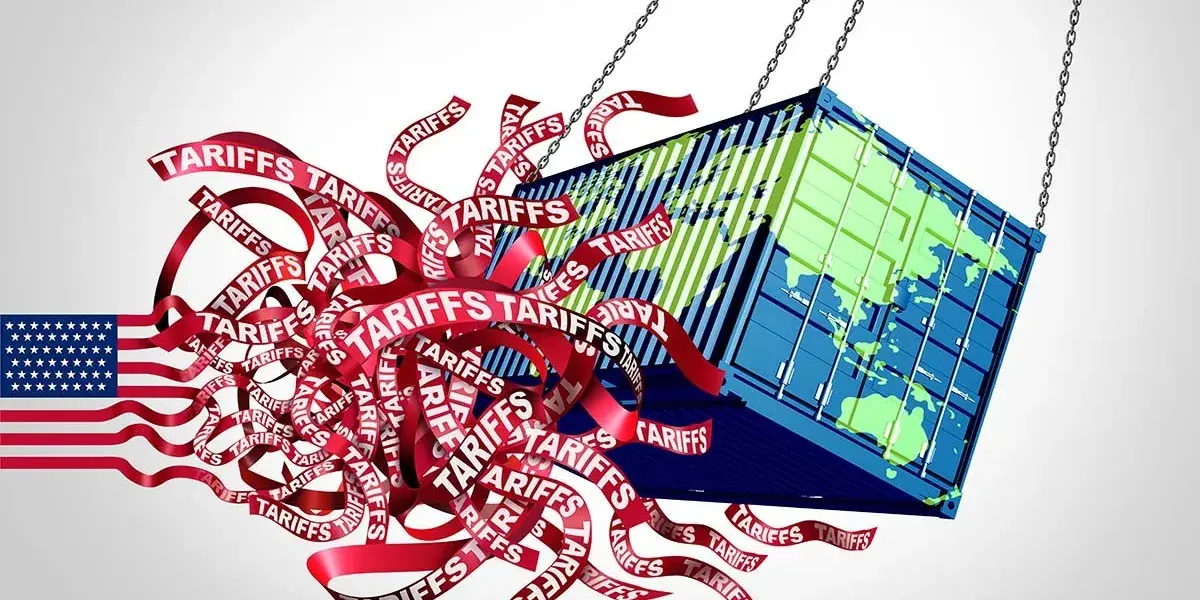
Global trade policy never really leaves the spotlight, but every few years it returns to center stage. In early 2026, renewed discussion of broad tariffs, targeted trade actions, and changing legal frameworks around executive authority has pushed trade back to the top of the economic agenda. Even without fully enacted measures, rhetoric and drafts are enough to move markets and reshape expectations.
Financial markets do not wait for the last signature on a bill. As soon as investors detect a non trivial probability that trade barriers might rise, they immediately begin pricing in the potential impact on corporate earnings, supply chains, and growth. Equity indices with high exposure to global manufacturing, shipping, and export oriented firms often react first. Currency markets then adjust, as traders reassess which economies might gain or lose from shifting trade flows.
At the heart of the concern is uncertainty. Businesses can adapt to almost any stable regime, even one with moderate tariffs, if the rules are clear and predictable. The real damage comes when firms do not know what rules they will face next quarter or next year. Capital spending plans get postponed, cross border investments are put on hold, and inventory strategies become more defensive. This uncertainty channel is one of the main ways that trade policy affects the macroeconomy.
From a macroeconomic perspective, higher tariffs are essentially a tax on trade. They usually push up import prices, which can feed into consumer price inflation, at least temporarily. Central banks must then decide whether to look through this cost push inflation or respond with tighter policy. If tariffs are broad and persistent, they can reduce potential growth by discouraging specialization and raising input costs. Output and productivity may suffer, while real wages feel pressure in sectors facing higher prices.
There is also a political economy dimension. Trade measures are often framed as a way to protect domestic jobs or address perceived unfair practices by trading partners. That can be popular in the short term, especially in regions that have experienced industrial decline. However, retaliation is a predictable response. Trading partners can respond with their own tariffs on politically sensitive sectors, such as agriculture or autos, turning a targeted measure into a broader trade conflict.
The distributional impact within countries is complex. Exporters that rely on open markets can lose, while some import competing sectors may benefit from temporary protection. Consumers generally face higher prices and fewer choices. Small and medium sized firms tend to have less capacity to redesign supply chains compared with large multinationals, which means they are often hit harder by sudden changes in trade rules.
Globally, uncertainty about US trade policy encourages many countries to deepen regional trade agreements and diversify their economic ties. For example, Asian economies continue to push forward regional integration and supply chain reconfiguration that relies less on a single market. European economies explore stronger intra European links and more strategic partnerships in energy, technology, and critical raw materials.
For investors, the key is distinguishing noise from signal. Short lived rhetorical flare ups may move markets for a few days, but the long term impact depends on actual legislation, the likelihood of enforcement, and the scope of retaliatory measures. Detailed sector level analysis is essential. Firms that can relocate production, redesign supply chains, or pass higher costs to customers are less vulnerable than those trapped in a single location or a single market.
Households feel the impact in more subtle ways. Higher import prices can raise the cost of consumer goods, particularly electronics, clothing, and household items that rely on complex global supply chains. If trade uncertainty slows overall growth, job creation may also soften, especially in export oriented regions.
From a policy standpoint, the challenge is balancing legitimate concerns about fairness and national security with the economic benefits of open trade. Well designed agreements that address issues such as subsidies, intellectual property, and market access can provide more durable benefits than unilateral tariff hikes. Transparent rules, predictable enforcement, and multilateral dialogue reduce uncertainty and support investment.
In the coming months, global attention will remain focused on how US trade proposals evolve, how key partners respond, and whether compromise can prevent a more damaging escalation. For now, volatility is a reminder that in an interconnected world, trade policy is financial policy, and financial policy quickly becomes household economics.
Cite this article
“How Renewed US Tariff Talk Is Reshaping Global Market Sentiment.” The Economic Institute, 24 February.
How did this article make you feel?
Comments
No comments yet. Be the first to share your thoughts.
Further Reading
More from Global Economics
The Iran Escalation and America's Economic Tightrope
Trump's strikes on Iran have introduced a dangerous new variable into an already fragile US economic equation, and Washington has precious little room to absorb the shock.
Global EconomicsThe Strait Gambit: Why Iran's Oil Dependency on China Is Its Greatest Strategic Weakness
As Iran chokes off the Strait of Hormuz to pressure the West, it is simultaneously strangling the very trade lifeline that keeps its own economy alive.
Global EconomicsOil at the Brink: How the Iran War Is Reshaping Global Energy Markets
With crude prices nearing $100 a barrel and the Strait of Hormuz effectively closed to normal traffic, the economic fallout from the US-Israel campaign against Iran is forcing a rapid realignment of global energy supply chains.
Global EconomicsThe Strait of Hormuz Gamble: Why Trump's Naval Pledges Can't Calm Rattled Energy Markets
Washington's promise of naval escorts and insurance guarantees for Gulf shipping offers symbolic reassurance, but the economics of energy disruption are already doing their damage.