The Strait Gambit: Why Iran's Oil Dependency on China Is Its Greatest Strategic Weakness
As Iran chokes off the Strait of Hormuz to pressure the West, it is simultaneously strangling the very trade lifeline that keeps its own economy alive.
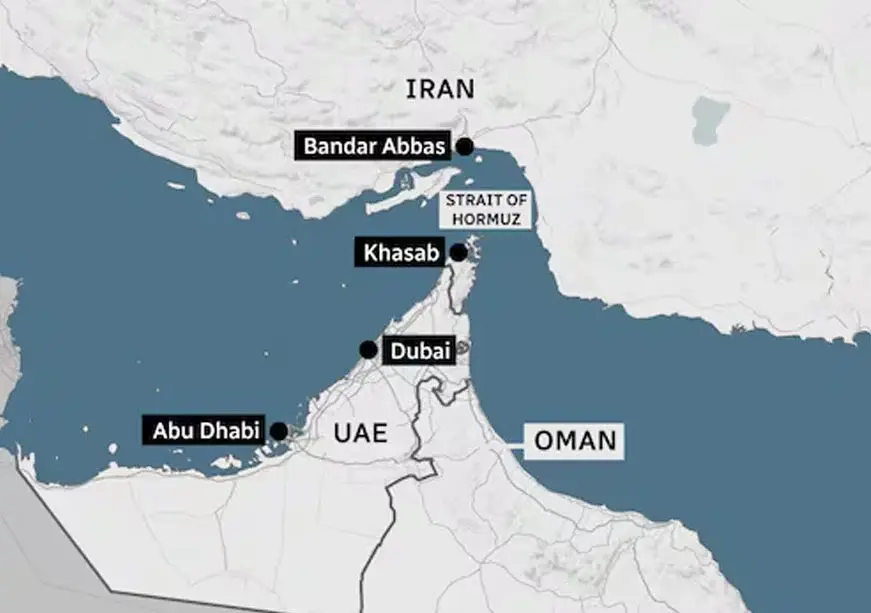
There is a particular irony embedded in Iran's decision to weaponize the Strait of Hormuz. The narrow waterway, through which roughly 20 percent of the world's traded oil flows, has long been Tehran's most potent geopolitical lever. Block it, and you send shockwaves through global energy markets, spike prices at American and European fuel pumps, and force adversaries into painful economic calculations. But the lever cuts both ways. Iran's own economic survival depends heavily on exports that flow through or near the same waters it is now threatening to close.
This contradiction sits at the heart of Iran's economic position in the ninth day of U.S. and Israeli strikes, and it reveals something important about the limits of resource nationalism as a wartime strategy.
China as Economic Lifeline
For the better part of a decade, Iran has depended on China as its buyer of last resort. Under the suffocating weight of Western sanctions, Beijing has absorbed Iranian crude at discounted prices, providing Tehran with the hard currency it needs to fund government operations, subsidize domestic energy consumption, and sustain its military apparatus. Estimates from before the current conflict placed Chinese purchases of Iranian oil at somewhere between 800,000 and 1.5 million barrels per day, making China not merely a trading partner but a structural pillar of the Iranian state budget.
This dependency was always a strategic vulnerability dressed up as a partnership. China extracts favorable pricing precisely because it is Iran's only meaningful customer. Tehran cannot easily walk away from those discounts, and Beijing knows it. The relationship resembles, in some respects, the colonial commodity arrangements of an earlier era: a resource-rich nation locked into exporting raw materials to a single dominant power, with little leverage to negotiate terms.
Now, with the Strait of Hormuz largely halted as a shipping corridor, that vulnerability has been laid bare in real time. Iranian threats have driven most commercial tanker traffic away from the Gulf, but Iranian crude still needs to reach Chinese refineries. The disruption Iran is inflicting on global markets is simultaneously a disruption to its own revenue streams.
Historical Parallels: When Resource Weapons Backfire
History offers instructive precedents. The 1973 Arab oil embargo is the canonical example of energy used as a geopolitical weapon, but its aftermath is often misread. The embargo did succeed in shocking Western economies, but it also accelerated investment in North Sea oil, Alaskan production, nuclear energy, and fuel efficiency standards that permanently reduced OPEC's market share over the following decade. The wielder of the weapon catalyzed the very diversification that diminished its future power.
A closer parallel might be Russia's use of natural gas as leverage over Europe following the 2022 invasion of Ukraine. Moscow calculated that European dependence on Russian pipeline gas would constrain Western support for Kyiv. Instead, Europe undertook a historic and painful energy transition, dramatically expanding LNG import capacity, accelerating renewable deployment, and essentially restructuring its entire energy architecture to eliminate Russian dependence. Russia lost its largest premium customer permanently.
Iran risks a similar dynamic. Every week that Hormuz remains disrupted is another week that India deepens its relationships with Gulf Cooperation Council suppliers, that Asian refiners reconfigure supply chains, and that the marginal case for additional investment in non-Gulf production strengthens. The disruption Iran is engineering may outlast the conflict itself, with lasting consequences for Tehran's postwar economic position.
India's Response: A Case Study in Supply Resilience
India's reaction to the crisis illustrates how quickly large energy importers can adapt when sufficiently motivated. Indian refiners, which had been among Iran's most significant customers before sanctions were tightened in earlier years, have now moved to tap alternative crude supplies and are maintaining elevated processing rates to build strategic buffers. India holds roughly 250 million barrels in strategic reserves, providing seven to eight weeks of coverage across the full supply chain.
This is not improvisation. It reflects years of quiet investment in supply diversification following the experience of previous Iran-related disruptions. The lesson Indian policymakers absorbed was simple: single-source dependency is a national security liability. The current crisis is accelerating the institutionalization of that lesson across multiple importing nations simultaneously.
For Iran, this means that even a postwar normalization of the Strait will not simply restore the pre-conflict status quo. Market relationships that took years to build have been severed or rerouted. Trust in Gulf supply chains has been damaged, prompting structural investment in alternatives that will persist regardless of how the conflict resolves.
The China Question
Beijing's position in this conflict deserves particular scrutiny. China has called for diplomatic engagement and framed high-level talks with the United States as vital, a posture that reflects genuine anxiety about the economic spillover from sustained Gulf disruption. Chinese refiners depend on affordable Gulf crude to maintain the cost competitiveness of their industrial sector. Rising oil prices, now approaching $100 per barrel, act as a tax on Chinese manufacturing, at a moment when Beijing is already managing significant domestic economic pressures.
China cannot simply absorb Iranian oil if it cannot be shipped safely. And it cannot publicly pressure Iran too aggressively without undermining its broader positioning as an alternative to the U.S.-led order. Beijing is caught between its economic interests, which favor a swift resolution, and its geopolitical posture, which requires avoiding any appearance of alignment with Washington.
This tension gives the United States and its allies a degree of indirect leverage over Chinese behavior that is rarely acknowledged in coverage of the conflict. A prolonged disruption that meaningfully damages Chinese economic performance creates internal pressure on Beijing to use whatever influence it holds in Tehran, even if that pressure is applied quietly and never publicly acknowledged.
What Comes Next
The economic logic of the current situation points toward an eventual, if painful, resolution. Iran cannot sustain indefinite disruption of its own primary export corridor without accelerating the fiscal deterioration of the state. China cannot indefinitely absorb the costs of elevated oil prices without significant domestic consequences. And the broader global economy, already absorbing the shock of oil near $100 per barrel, has limited tolerance for sustained supply disruption before demand destruction begins to set its own ceiling on prices.
What the conflict has already demonstrated, regardless of how it ends, is that the era of treating the Strait of Hormuz as an uncontested chokepoint is over. The disruption is now a known risk, priced into investment decisions, supply chain architectures, and national energy strategies across dozens of importing nations. That repricing alone represents a permanent structural shift in the global energy landscape, one that will outlast the conflict and reshape the economics of the Gulf region for years to come.
For Iran, winning the tactical battle of the Strait may mean losing the longer strategic contest for economic relevance in a world that has been forcibly reminded of the cost of Gulf dependency.
Cite this article
TEI Editorial. “The Strait Gambit: Why Iran's Oil Dependency on China Is Its Greatest Strategic Weakness.” The Economic Institute, 14h ago.
How did this article make you feel?
Comments
No comments yet. Be the first to share your thoughts.
Further Reading
More from Global Economics
The Iran Escalation and America's Economic Tightrope
Trump's strikes on Iran have introduced a dangerous new variable into an already fragile US economic equation, and Washington has precious little room to absorb the shock.
Global EconomicsOil at the Brink: How the Iran War Is Reshaping Global Energy Markets
With crude prices nearing $100 a barrel and the Strait of Hormuz effectively closed to normal traffic, the economic fallout from the US-Israel campaign against Iran is forcing a rapid realignment of global energy supply chains.
Global EconomicsThe Strait of Hormuz Gamble: Why Trump's Naval Pledges Can't Calm Rattled Energy Markets
Washington's promise of naval escorts and insurance guarantees for Gulf shipping offers symbolic reassurance, but the economics of energy disruption are already doing their damage.
Global EconomicsAfrica’s Currency Pressures Are Reshaping Trade, Debt Costs, and Growth Strategies
Several African economies are facing renewed currency depreciation and rising external borrowing costs. This article examines how these pressures affect imports, inflation, investment flows, and long term growth strategies, and why economic resilience depends on stronger regional integration and diversified production.