
Oil at the Brink: How the Iran War Is Reshaping Global Energy Markets
With crude prices nearing $100 a barrel and the Strait of Hormuz effectively closed to normal traffic, the economic fallout from the US-Israel campaign against Iran is forcing a rapid realignment of global energy supply chains.
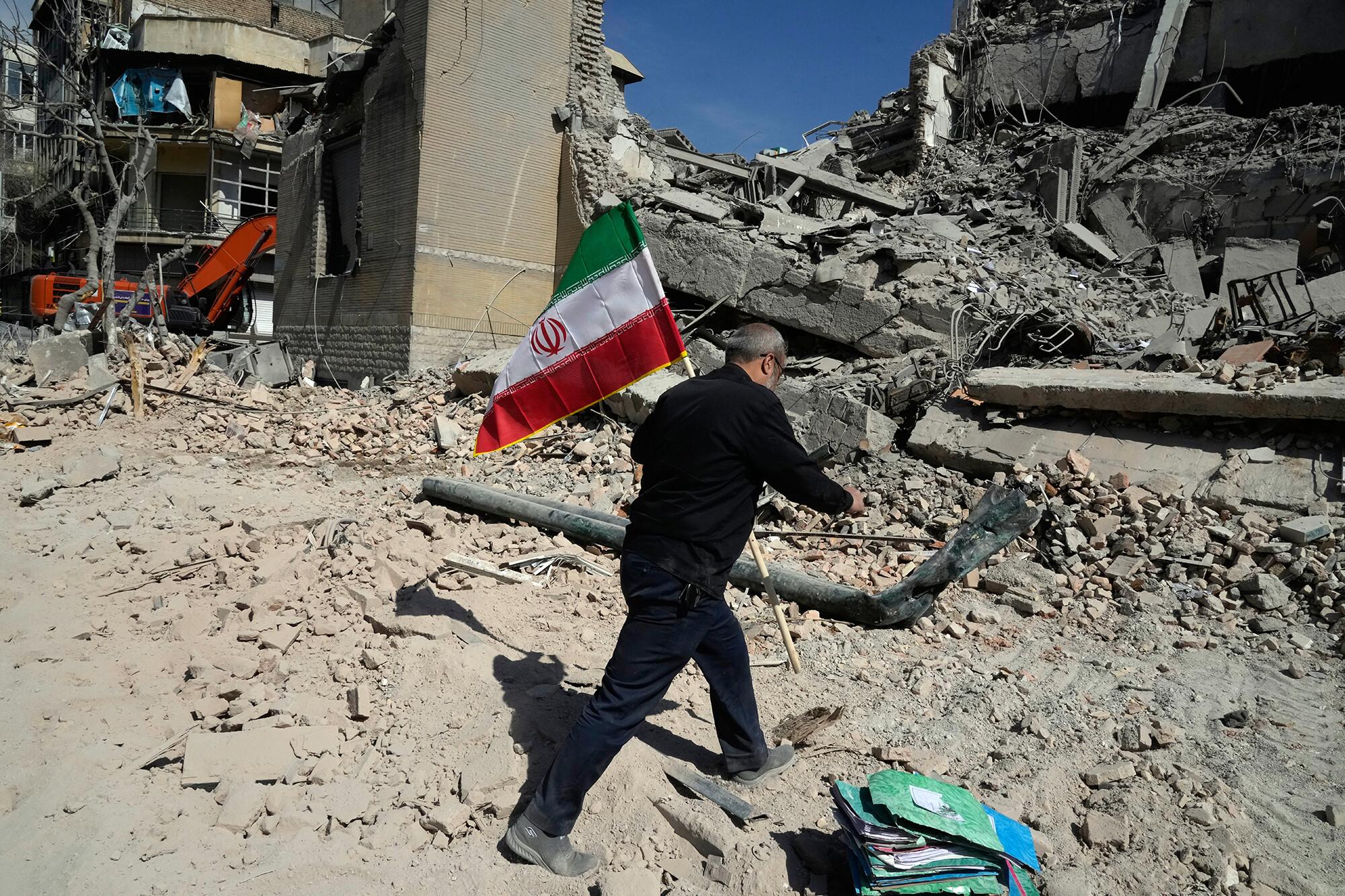
Nine days into a sustained US-Israeli military campaign against Iran, the world's energy markets are absorbing a shock that analysts had long war-gamed but few believed would arrive so suddenly. Crude oil prices are approaching $100 per barrel, the Dow Jones Industrial Average has shed hundreds of points in a single session, and refineries from Mumbai to Rotterdam are scrambling to secure alternative feedstocks. The immediate triggers are military, but the economic consequences are structural, and they will outlast whatever ceasefire eventually materialises.
The Strait of Hormuz and the Price of Closure
Roughly 20 percent of the world's traded oil passes through the Strait of Hormuz on any given day. Iran's decision to threaten and effectively curtail shipping through the waterway has not fully stopped flows, but it has inserted a risk premium that markets are pricing in aggressively. Greek shipowner George Prokopiou has made headlines by continuing to route vessels through the strait, echoing the audacity of Aristotle Onassis and Stavros Niarchos during earlier Persian Gulf crises. His ships are among the very few doing so. Most commercial operators have diverted to longer, costlier routes around the Arabian Peninsula or suspended sailings entirely.
That diversion adds days and significant cost to every cargo. Freight rates on tanker routes that bypass the Gulf have surged. Insurance war-risk premiums, already elevated before the first strike, have reached levels not seen since the tanker wars of the 1980s. Every dollar added to the cost of moving a barrel eventually shows up at the petrol pump, in airline ticket prices, and in the cost of goods manufactured using petrochemicals. The inflationary channel is direct and fast-moving.
India's Strategic Calculation
Among the major importers, India's response illustrates how mid-sized economies are navigating a crisis they did not create. India had been one of the largest buyers of discounted Iranian crude, a trade relationship sustained through informal mechanisms even under earlier sanctions regimes. That channel is now closed by force rather than diplomacy. Indian refiners have responded by tapping alternative suppliers in West Africa, the Americas, and the North Sea, while simultaneously drawing down a strategic reserve estimated at 250 million barrels, covering seven to eight weeks of full supply-chain needs.
Refineries have deferred scheduled maintenance shutdowns to maintain processing rates, effectively trading long-term operational efficiency for short-term supply continuity. It is a rational response to an acute shock, but it stores up costs for later. Maintenance deferrals in refining are not indefinitely sustainable; they compress the window for planned outages into a future period when, ideally, the crisis has passed. If the conflict drags on, India's buffer buys time but not immunity.
The broader lesson from India's posture is that supply diversification, long advocated by energy security analysts, is the single most effective hedge available to import-dependent economies. Countries that spent the past decade building relationships with multiple suppliers and investing in storage infrastructure are coping considerably better than those that concentrated their procurement.
Historical Parallels: 1973, 1979, and the Limits of Analogy
Every major oil shock invites comparison to its predecessors, and those comparisons are instructive up to a point. The 1973 Arab oil embargo demonstrated that politically motivated supply interruptions could trigger recessions in advanced economies, reshape the automotive industry, and accelerate investment in alternatives. The 1979 Iranian Revolution removed roughly 4 percent of global supply almost overnight and pushed nominal oil prices to levels that, adjusted for inflation, were not surpassed for three decades.
The current episode differs in important ways. Global energy markets are more diversified than in 1973 or 1979. The United States has moved from being a major importer to the world's largest producer of crude oil, which changes the domestic political economy of an oil shock significantly. Strategic petroleum reserves exist in scale across OECD countries specifically to buffer supply interruptions. Renewable energy, while not a short-run substitute for crude, has reduced the oil intensity of many advanced economies.
Yet the differences should not breed complacency. The share of global liquefied natural gas passing through or near the Persian Gulf is also substantial. European countries that pivoted away from Russian gas after 2022 have in some cases increased their dependence on Gulf LNG, inadvertently creating a new vulnerability. A prolonged conflict that disrupts LNG shipments would arrive at a moment when European gas storage levels and political tolerance for energy price spikes are both under pressure.
Financial Markets and the Risk-Off Cascade
The Dow's decline of more than 450 points in a single session reflects more than the direct economic impact of higher oil prices. Financial markets are pricing in a broader risk-off scenario: tighter corporate margins from elevated input costs, potential central bank hesitation on rate cuts if oil-driven inflation re-accelerates, and the general uncertainty that accompanies a military conflict involving a country that sits at the intersection of global energy flows and regional geopolitics.
Equity markets in India have also sold off sharply, with the GIFT Nifty futures pointing to a weak Monday open following the week's global declines. Rising US bond yields and a stronger dollar are compounding the pressure on emerging market assets, triggering capital outflows from economies whose current accounts are exposed to higher oil import bills. The feedback loop between commodity markets and financial markets is well established; what varies is the speed and severity of the transmission.
What Comes Next
The economic trajectory from here depends heavily on variables that are inherently difficult to forecast: the duration and geographic scope of the conflict, whether Gulf states that have so far remained on the sidelines are drawn in, and whether diplomatic channels between Beijing and Washington produce any dampening effect on escalation. China's call for high-level talks with the United States reflects its own acute exposure: Beijing is Iran's largest oil customer, and any scenario that permanently disrupts that trade relationship forces a costly restructuring of China's own energy procurement.
For policymakers and investors, the immediate priorities are clear. Strategic reserve releases, coordinated if possible through the International Energy Agency, can cap the near-term price spike. Supply diversification and infrastructure investment remain the durable response. And the conflict is a sobering reminder that energy transition, beyond its climate logic, carries a profound energy security rationale: every percentage point of demand shifted away from imported fossil fuels is a percentage point less exposure to the next geopolitical rupture in a hydrocarbon-producing region.
The economics of this crisis are not separable from its politics. But the economic consequences will persist long after the military phase concludes, reshaping trade routes, investment decisions, and the strategic calculations of every major economy on earth.
Cite this article
TEI Editorial. “Oil at the Brink: How the Iran War Is Reshaping Global Energy Markets.” The Economic Institute, 14h ago.
How did this article make you feel?
Comments
No comments yet. Be the first to share your thoughts.
Further Reading
More from Global Economics
The Iran Escalation and America's Economic Tightrope
Trump's strikes on Iran have introduced a dangerous new variable into an already fragile US economic equation, and Washington has precious little room to absorb the shock.
Global EconomicsThe Strait Gambit: Why Iran's Oil Dependency on China Is Its Greatest Strategic Weakness
As Iran chokes off the Strait of Hormuz to pressure the West, it is simultaneously strangling the very trade lifeline that keeps its own economy alive.
Global EconomicsThe Strait of Hormuz Gamble: Why Trump's Naval Pledges Can't Calm Rattled Energy Markets
Washington's promise of naval escorts and insurance guarantees for Gulf shipping offers symbolic reassurance, but the economics of energy disruption are already doing their damage.
Global EconomicsAfrica’s Currency Pressures Are Reshaping Trade, Debt Costs, and Growth Strategies
Several African economies are facing renewed currency depreciation and rising external borrowing costs. This article examines how these pressures affect imports, inflation, investment flows, and long term growth strategies, and why economic resilience depends on stronger regional integration and diversified production.