
China’s Slowing Industrial Momentum and What It Means for Global Trade and Investment Flows
China’s Slowing Industrial Momentum and What It Means for Global Trade and Investment Flows
China’s economic influence extends far beyond its borders. When industrial momentum slows, the effects ripple across global markets, supply chains, commodity exporters, and investment flows. During the week of February 2026, fresh indicators pointed toward cooling manufacturing activity and weaker domestic demand. Export growth has moderated, factory utilisation rates have slipped, and private sector investment remains uneven. These signals have renewed questions about the sustainability of China’s post pandemic recovery and the implications for global economic stability.
At the core of the slowdown is a structural shift in China’s growth model. For two decades, rapid industrial expansion, urbanisation, and export oriented manufacturing powered global supply chains. Today, the drivers are more fragmented. Domestic consumption has not fully recovered, private property investment remains subdued, and business confidence has weakened in some sectors. The government has introduced targeted support, but policy makers appear cautious about large scale stimulus due to debt concerns and long term financial stability risks.
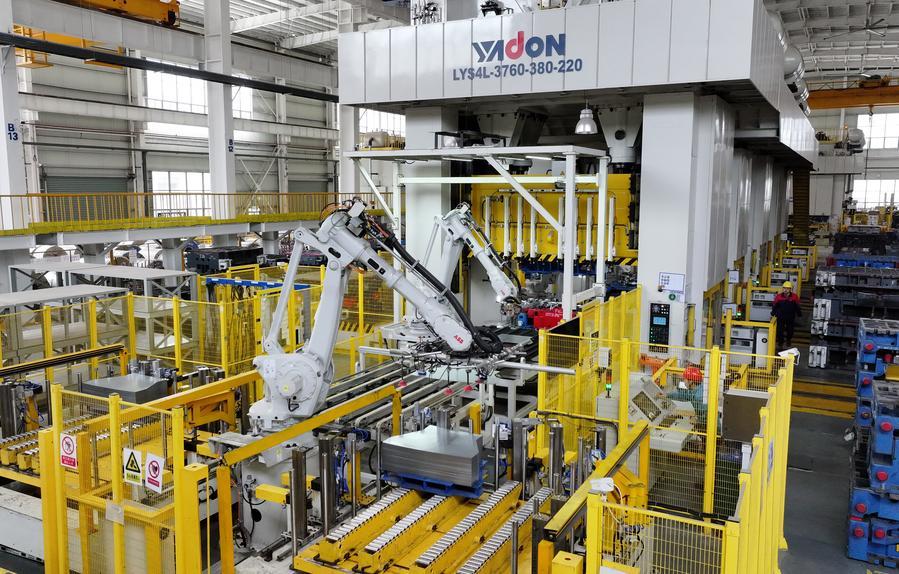
One of the clearest signs of pressure is in the manufacturing sector. Surveys show slower order growth and reduced hiring in export oriented industries. Global demand for electronics, machinery, and consumer goods has softened after a period of strong inventory rebuilding. China’s competitive position remains strong, but the pace of external demand is changing. This matters because manufacturing employs millions of workers and supports extensive upstream supply networks. A slowdown affects everything from steel and chemical production to energy consumption and regional logistics.
The property sector remains a significant constraint. Although authorities have taken steps to stabilise the market, sentiment among homebuyers and developers is still fragile. Weak property investment reduces demand for materials such as cement, glass, and household appliances. It also dampens household wealth perceptions, which in turn restrains consumption. In a country where real estate has long served as a store of value, confidence in the sector remains central to overall economic momentum.
China’s slowdown has notable external consequences. Commodity exporters feel the impact most immediately. Countries supplying iron ore, copper, energy products, and agricultural goods depend on Chinese demand for revenue and fiscal stability. When Chinese industrial activity cools, global commodity prices often adjust. Even small reductions in Chinese buying can influence producers across Latin America, Africa, and Australia due to the scale of China’s consumption.
Regional partners in East and Southeast Asia are also closely tied to China’s manufacturing cycle. Economies such as Vietnam, South Korea, and Malaysia supply intermediate goods used in Chinese production. A slowdown in Chinese factories reduces orders for semiconductors, textiles, and electronic components. At the same time, some Southeast Asian economies benefit indirectly from supply chain diversification as global firms expand operations beyond China. The net effect varies by country, but regional trade flows are clearly adjusting.
Investment flows provide another lens. Foreign companies continue to operate in China, but investment sentiment is more selective. Firms are balancing China’s large consumer market with concerns about regulatory changes, rising costs, and geopolitical uncertainty. Some global manufacturers have diversified toward India, Mexico, and Southeast Asia to reduce concentration risk. This trend does not imply a full relocation but reflects a more cautious approach to long term capital commitments.
Despite these headwinds, China retains significant strengths. Its industrial base is highly competitive, infrastructure remains world class, and its technology ecosystem continues to advance in areas such as electric vehicles, batteries, and automation. These sectors are bright spots in an otherwise mixed landscape. Exports of electric vehicles and renewable energy equipment, for example, have grown strongly, offsetting weakness in traditional manufacturing categories. This shift signals that China’s economic trajectory is evolving rather than declining.
Policy makers face a delicate balance. They aim to support growth without triggering excessive credit expansion. Recent measures include targeted lending to prioritised industries, support for small businesses, and efforts to stabilise local government finances. Monetary policy remains accommodative, but authorities have avoided large scale stimulus that could worsen structural imbalances. The strategy reflects a long term commitment to rebalancing the economy toward consumption and innovation.
For the global economy, China’s trajectory in 2026 will shape trade volumes, commodity prices, and financial flows. Countries that rely heavily on Chinese demand must prepare for more moderate import growth. Firms must adapt to more complex supply chain dynamics that include both China based capacity and diversified regional networks. Investors must evaluate China with a more nuanced view that balances opportunity with risk.
The key question is whether China can stabilise growth while advancing structural reforms. If domestic demand strengthens and property markets stabilise, global trade momentum will improve. If weakness persists, the ripple effects will continue across major emerging markets and advanced economies alike. Understanding these dynamics is essential for anticipating shifts in global economic conditions.
China remains a central pillar of global commerce. Its current slowdown does not diminish its importance, but it does mark a transition toward a more measured and complex growth pattern. As this transition continues, the world will need to adjust to a China that influences global economics in new and evolving ways.
Cite this article
“China’s Slowing Industrial Momentum and What It Means for Global Trade and Investment Flows.” The Economic Institute, 19 February.
How did this article make you feel?
Comments
No comments yet. Be the first to share your thoughts.
Further Reading
More from Global Economics
The Iran Escalation and America's Economic Tightrope
Trump's strikes on Iran have introduced a dangerous new variable into an already fragile US economic equation, and Washington has precious little room to absorb the shock.
Global EconomicsThe Strait Gambit: Why Iran's Oil Dependency on China Is Its Greatest Strategic Weakness
As Iran chokes off the Strait of Hormuz to pressure the West, it is simultaneously strangling the very trade lifeline that keeps its own economy alive.
Global EconomicsOil at the Brink: How the Iran War Is Reshaping Global Energy Markets
With crude prices nearing $100 a barrel and the Strait of Hormuz effectively closed to normal traffic, the economic fallout from the US-Israel campaign against Iran is forcing a rapid realignment of global energy supply chains.
Global EconomicsThe Strait of Hormuz Gamble: Why Trump's Naval Pledges Can't Calm Rattled Energy Markets
Washington's promise of naval escorts and insurance guarantees for Gulf shipping offers symbolic reassurance, but the economics of energy disruption are already doing their damage.