Through the Strait: How the Iran Conflict Is Turning the Dow Jones Into a Geopolitical Barometer
The Dow's sharp slide reflects something deeper than volatility: markets are repricing risk in a world where a single chokepoint can move global capital.
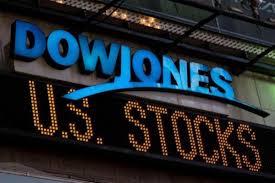
When the Dow Jones Industrial Average shed more than 450 points in a single session on March 6, 2026, closing at 47,501.55, the headline number told only part of the story. Yes, equity markets were under pressure. Yes, oil was surging toward levels not seen since the supply shocks of the early 2020s. But what the sell-off actually represented was something more structurally significant: the moment when financial markets began treating the Iran conflict not as a short-term event to be discounted away, but as a durable reshaping of the geopolitical and economic landscape that requires a fundamental recalibration of risk.
The Transmission Mechanism: How War Moves Markets
It is worth being precise about how geopolitical shocks move from battlefield to trading floor, because the pathways are not always intuitive. The most direct channel in this instance is energy prices. The Strait of Hormuz, through which roughly 20 percent of global oil supply and about 25 percent of global liquefied natural gas (LNG) flows, has been significantly disrupted by the ongoing conflict. Iran's threats to, and periodic interference with, shipping in the strait have already caused a meaningful contraction in the volume of crude moving through one of the world's most consequential chokepoints.
Higher oil prices act as a tax on every oil-importing economy. For the United States, which remains a major consumer of petroleum products despite its rise as a producing nation, the pass-through from crude oil to retail gasoline prices typically occurs within four to six weeks. Gasoline prices are politically and economically sensitive: they reduce household disposable income, feed into headline inflation figures, and complicate the Federal Reserve's already delicate task of calibrating monetary policy.
The second channel is uncertainty itself. Markets do not simply price known risks; they price the distribution of possible outcomes. When that distribution widens, as it does when a regional conflict involving multiple major powers remains unresolved and unpredictable, the rational response is to demand a higher return for holding risky assets. Equity valuations compress. Credit spreads widen. The dollar strengthens as a safe-haven asset, which in turn creates headwinds for emerging market economies carrying dollar-denominated debt.
Historical Echoes: Oil Shocks and Market Psychology
The relationship between Middle East conflict and US equity markets has a long and instructive history. The 1973 Arab oil embargo triggered a recession in the United States and contributed to a bear market in which the Dow lost nearly 45 percent of its value in real terms between 1973 and 1974. The Iranian Revolution of 1979 and the subsequent hostage crisis caused a second oil shock that pushed US inflation into double digits and led to the aggressive monetary tightening that would later be known as the Volcker shock.
More recent episodes have been shorter and sharper. Iraq's invasion of Kuwait in August 1990 caused oil prices to roughly double in three months and contributed to a US recession. The run-up to the 2003 Iraq War created significant equity market uncertainty, though prices fell in the actual invasion's aftermath as markets priced in a swift conclusion that did not ultimately arrive. Each of these episodes illustrates a consistent pattern: markets tend to underestimate the duration and complexity of Middle East conflicts in their initial pricing, and then gradually incorporate a more pessimistic scenario as the situation drags on.
There are meaningful differences in 2026, however. The US economy is more energy-independent than it was during previous shocks, which provides some insulation. But the global economy is also more interconnected, meaning that disruptions to Asian energy supply chains, particularly for major oil importers like India, Japan, South Korea, and China, create indirect demand effects on US export markets and corporate earnings.
The Fed's Uncomfortable Position
Perhaps the most consequential economic dimension of the current sell-off is the position it places the Federal Reserve in. The central bank entered 2026 navigating a careful path between still-elevated inflation and a softening labor market. A sustained surge in oil prices complicates both sides of that equation simultaneously.
On one hand, higher energy prices push headline inflation upward, potentially reigniting the kind of inflationary psychology that the Fed spent much of 2022 to 2024 working to suppress. On the other hand, the demand destruction associated with a genuine oil shock, combined with tightening financial conditions driven by equity market declines and wider credit spreads, creates genuine recession risk. This is the stagflationary scenario that central bankers most dread: rising prices alongside weakening growth, with no clean policy lever to pull that addresses both simultaneously.
The Fed's historical record in navigating supply-shock stagflation is not reassuring. The institution's credibility was badly damaged in the 1970s by a failure to respond decisively enough to oil-driven inflation, and the cure administered by Volcker in the early 1980s was itself deeply painful. The current Fed leadership will be acutely aware of this history, which may incline it toward erring on the side of tighter policy even as growth slows, a choice that would further pressure equity valuations.
What Investors Are Actually Pricing
The composition of the Dow's decline is instructive. Airlines, chemicals, logistics companies, and consumer discretionary stocks led the sell-off, reflecting a coherent investment thesis: higher fuel costs compress margins for transportation-heavy businesses, while squeezed consumer budgets reduce spending on non-essential goods. Meanwhile, energy sector stocks and certain defense contractors have seen gains, a pattern entirely consistent with prior conflict-driven market rotations.
What is notably absent so far is the kind of systemic financial stress that characterized the 2008 crisis or even the early weeks of the COVID-19 pandemic in March 2020. Credit markets remain functional. Banking sector stress indicators are not flashing emergency signals. This suggests that while the current sell-off is real and the underlying economic concerns are legitimate, markets are still treating this as a macro repricing rather than a systemic liquidity event.
The Longer Horizon
Whether that assessment holds depends heavily on how the conflict evolves. A negotiated de-escalation that reopens the Strait of Hormuz to normal traffic could see oil prices retreat sharply and equities recover much of their lost ground within weeks. A prolonged conflict, or worse, an escalation that draws in additional regional powers and further constrains global energy supply, would validate a much more bearish market narrative.
For now, the Dow's decline serves as a useful reminder of something that periods of sustained growth tend to obscure: financial markets are not separate from the physical world of geography, resources, and power. When a strait 40 miles wide at its narrowest point becomes contested, the effects ripple outward into every portfolio on every trading floor on earth. Understanding that connection, the transmission mechanism from geopolitical event to economic consequence, is not merely useful for investors. It is essential for anyone trying to make sense of the world we are navigating.
Cite this article
TEI Editorial. “Through the Strait: How the Iran Conflict Is Turning the Dow Jones Into a Geopolitical Barometer.” The Economic Institute, 10h ago.
How did this article make you feel?
Comments
No comments yet. Be the first to share your thoughts.
Further Reading
More from Finance
The FTSE 100's Defensive Armor: Why Britain's Index Is Built for Crises
As geopolitical shocks rattle global markets, the FTSE 100's old-economy composition is proving less a liability and more a lifeline, and the reasons why tell us something important about how markets behave under stress.
FinanceBitcoin Near Two Month Lows as Weak Momentum and Rate Fears Drive a Risk Off Shift
Bitcoin has slipped toward the mid sixty thousand range, trading near two month lows as global markets adopt a risk off tone. With ETF outflows rising and traders seeking downside protection, the digital asset market is reassessing liquidity, inflation risks, and macro uncertainty. This article examines the economic forces behind the downturn and what they signal for global capital flows.
FinanceBonds Are Betting on an AI Productivity Leap, but Can the Rally Last
Global bond markets have rallied as investors price in the possibility that artificial intelligence will significantly raise productivity and reduce long term inflation. This article examines why investors are so confident, what data would need to validate the thesis, and where the biggest risks lie if the AI productivity narrative proves too optimistic.
FinanceEmerging Market Debt: Fundamentals, Dollar Cycles, and Sovereign Risk
Emerging market bonds often rally when global liquidity improves and the US dollar softens. But not every rally reflects structural reform or fiscal strength. This analysis examines whether recent performance in emerging market debt is driven by stronger fundamentals or by external monetary conditions, and what that means for sovereign risk assessment.