Tesla's Pivot to Autonomy: A High-Stakes Bet on the Next Era of Transportation
As Tesla distances itself from conventional electric vehicle metrics and doubles down on AI-driven autonomy and robotics, investors face a fundamental question: is this a visionary transformation or a costly distraction at the worst possible moment?
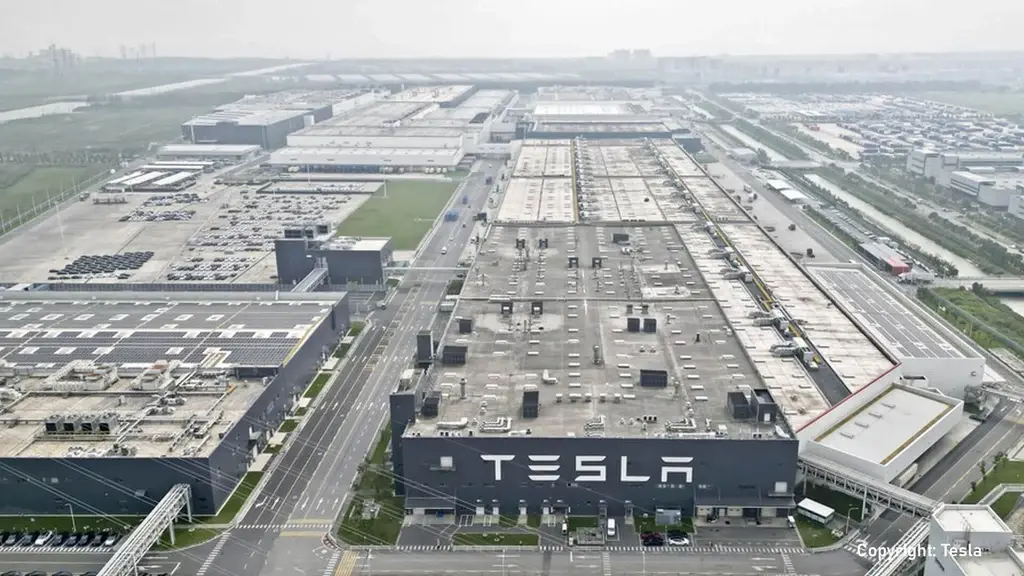
Tesla has always defied straightforward categorisation. It arrived in public markets as a car company, was subsequently repriced as a technology company, and is now asking investors to underwrite a third identity: an artificial intelligence and robotics platform that happens to manufacture vehicles. The stock's recent slide to $396.73, down more than 2 percent in a single session and well off its peaks, reflects the tension between those competing narratives rather than any single piece of bad news. Understanding what Tesla is actually trying to become, and whether the economics support the ambition, requires stepping back from the daily price action.
The Strategic Logic of the Pivot
Tesla's leadership has been explicit about the company's direction for several years. The autonomous driving programme, marketed as Full Self-Driving, has consumed billions of dollars in research and development expenditure without yet delivering the level-four or level-five autonomy originally promised on aggressive timelines. The robotics initiative, centred on the Optimus humanoid robot, represents an even longer-dated bet on the convergence of AI, sensor technology, and mechanical engineering.
The business logic, as articulated by the company, runs as follows: the marginal cost of software and AI capability deployed across an installed base of millions of vehicles is low, while the revenue potential from selling autonomy as a subscription service is enormous. A fleet of autonomous Tesla vehicles operating as a ride-hailing network would, in theory, generate recurring revenue streams that dwarf the one-time margin on a vehicle sale. Similarly, if humanoid robots become a scalable product, the addressable market is effectively the entire global labour force in physical tasks.
These are not implausible theses. They are, however, theses that require exceptional execution over a long time horizon, and they are being pursued against a backdrop of intensifying competitive pressure, regulatory scrutiny, and a macroeconomic environment that is becoming less forgiving by the week.
The NHTSA Deadline and the Regulatory Overhang
The immediate catalyst for investor nervousness is a deadline from the National Highway Traffic Safety Administration relating to Tesla's driver-assistance systems. Regulators have repeatedly scrutinised the gap between how Tesla markets its autonomous capabilities and what those systems can reliably deliver in real-world conditions. A mandated software update, a fleet recall, or a restriction on how FSD can be activated in certain conditions would not merely be a reputational setback. It would directly undermine the commercial case for the autonomy-as-a-service model by calling into question the timeline to genuine driverless operation.
Regulatory risk is not new for Tesla, but it is more consequential now that the company's valuation depends so heavily on future software revenues rather than present hardware margins. When a car company misses a safety deadline, the market adjusts its near-term earnings estimate. When an AI platform company faces a regulatory challenge to its core product, the market must re-evaluate a much larger portion of the implied value.
Competition and the EV Market Squeeze
While Tesla is pivoting upmarket toward autonomy, the electric vehicle market it pioneered is becoming intensely competitive at the volume end. Chinese manufacturers, led by BYD, have driven down the cost of battery electric vehicles to levels that Tesla's current model lineup cannot match without significant margin compression. European and Korean automakers are fielding credible alternatives across multiple segments. In China, Tesla's most important growth market of the past five years, its market share has been under sustained pressure.
This creates a strategic dilemma that other technology-adjacent companies have faced before. The pivot to higher-margin, software-driven revenue is exactly the right long-term move if it succeeds. But it requires sustained investment at a moment when the core hardware business is facing margin pressure, and it exposes the company to execution risk in domains, namely AI software and robotics, where it faces formidable, well-capitalised rivals including Waymo, which is backed by Alphabet, and a growing field of humanoid robotics startups.
The historical parallel that comes to mind is IBM's transformation from a hardware company to a services and software business beginning in the early 1990s. That pivot ultimately succeeded, but it required years of painful restructuring, significant revenue decline in legacy segments, and a willingness to accept short-term earnings pain in pursuit of long-term repositioning. Tesla's pivot is more radical because it involves not merely shifting the revenue mix but redefining what the product fundamentally is.
The Broader Market Context
Tesla's stock does not move in isolation. The current macroeconomic environment, characterised by surging oil prices, geopolitical uncertainty, and renewed inflation concerns, is not a hospitable one for high-multiple growth stocks. When the risk-free rate is elevated and the near-term economic outlook is clouded, investors apply higher discount rates to far-future cash flows. That arithmetic is particularly punishing for a company whose investment case rests substantially on revenues that are five or more years from materialising at scale.
At the same time, the oil price shock creates an ironic tailwind for EV adoption at the consumer level. Higher petrol prices increase the total cost of ownership advantage of electric vehicles, particularly for high-mileage drivers. Tesla may find that the same geopolitical crisis that is depressing its stock price is, at the margin, accelerating the structural shift in consumer preference that underpins its long-term market.
What Investors Are Really Pricing
A stock price is a compressed expression of a vast number of probabilistic judgements. Tesla's current price reflects neither pure optimism about the autonomy vision nor pure pessimism about the competitive and regulatory challenges. It reflects uncertainty, which is arguably the honest assessment of a company at a genuine strategic inflection point.
The questions that will determine whether the current price represents value or a value trap are not primarily financial. They are technical and regulatory: Can Tesla's AI team deliver reliable full autonomy faster than Waymo and the Chinese competitors who are investing heavily in the same problem? Will regulators in the United States and Europe create frameworks that allow autonomous vehicle deployment at scale, or will liability concerns produce a thicket of restrictions that delay commercialisation by years? Can Optimus transition from demonstration unit to manufacturable product at a cost that permits a viable business model?
None of these questions have definitive answers today. What is clear is that Tesla has made its choice. The company is no longer competing primarily on the merits of its vehicles. It is competing on the merits of its artificial intelligence, and that is a very different race, with very different economics, and a much wider range of outcomes.
Cite this article
TEI Editorial. “Tesla's Pivot to Autonomy: A High-Stakes Bet on the Next Era of Transportation.” The Economic Institute, 13h ago.
How did this article make you feel?
Comments
No comments yet. Be the first to share your thoughts.
Further Reading
More from Business
Adidas, Stagflation, and the Consumer Confidence Illusion
Adidas posted double-digit growth in 2025, but its cautious 2026 forecast is a canary in the coal mine for global consumer spending under geopolitical and inflationary stress.
BusinessPhonePe's $10.5 Billion Bet: What India's Fintech IPO Boom Tells Us About the New Geography of Capital
As PhonePe eyes a $10.5 billion IPO valuation, its listing ambitions reveal how India's digital payments revolution is reshaping global investor calculus, and why emerging-market fintech is the decade's defining capital story.
BusinessHow Rising Food Prices Are Reshaping Household Budgets and Local Business Decisions in Emerging Markets
Weaker currencies and supply chain pressures in several emerging economies have pushed food costs higher in February 2026. This article examines how rising food prices influence household consumption, small business pricing strategies, labour decisions, and overall microeconomic behaviour.